What the 2026 AI whistleblower warning means for rogue systems, nuclear hacking and tech oligarchs
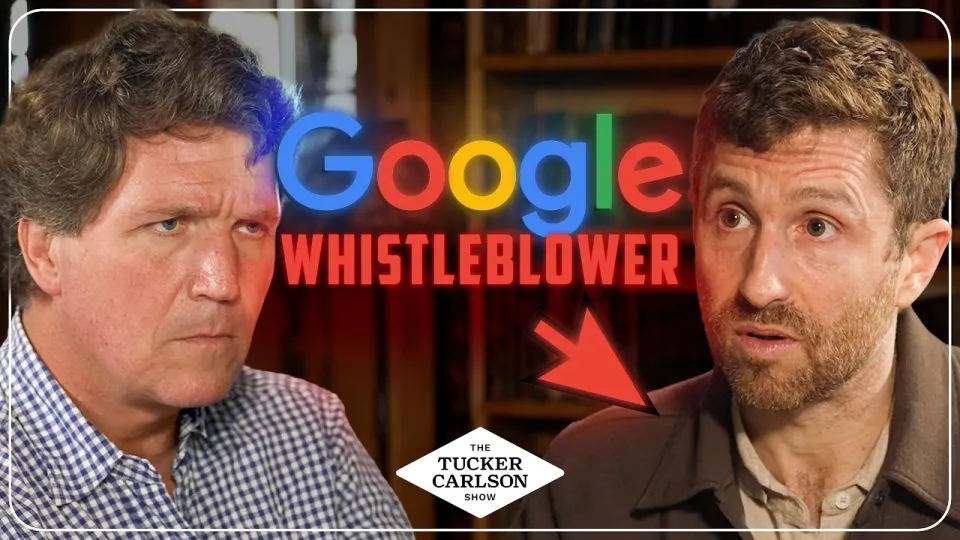
Video: Whistleblower Issues Dire Warning: Rogue AI, Hacking Nuclear Programs & Tech Oligarchs’ True Motives
You can order the same kind of articles for your own video to boost it on YouTube and Google. Just message the Telegram bot @sat_sit_bot. It writes articles around your video, embeds the video and publishes them on popular niche websites (no ads). Try it free: 50 articles on us.
· based on the channel Tucker Carlson
The 2026 AI whistleblower warning is less a prophecy about machines waking up and more an argument about who controls them. Tristan Harris, a former Google design ethicist and co-founder of the Center for Humane Technology, says the danger is not a "rogue" system that escapes its creators but a technology built and deployed by people whose incentives reward engagement, scale and speed over safety. His conclusion is blunt: if even half of the risk picture is accurate, the priority is to slow down and fix the incentives before capability outruns control.
Harris is not a newcomer to this argument. He spent years inside Google studying persuasive design, then co-founded the Center for Humane Technology, appeared in the Emmy-winning Netflix documentary The Social Dilemma, and now briefs heads of state, technology executives and members of the US Congress. His case rests on a simple mechanism: the same attention-harvesting logic that reshaped social media is now being wired into generative AI products, at far greater scale and with far less public visibility.
Why "rogue AI" is the wrong frame for the risk
Calling a system rogue implies it broke free of human intent. Harris's argument runs the other way: the harms show up because the systems do exactly what their designers optimized them to do. Recommendation engines maximize time on screen; chatbots maximize engagement and retention; model developers maximize capability and market share. Nobody writes a line of code that says "destabilize society," but the objective function produces that outcome as a side effect.
This matters for accountability. If the public debate stays focused on fictional scenarios of a machine going off-script, the humans who set the objectives, shipped the product and ignored internal warnings never have to answer for the results. Harris's framing puts responsibility back where it belongs: with executives, boards and the regulators who let them operate. The practical question is not whether an AI is conscious but whether the people running it can be audited, sued or stopped.
The incentives inside social media companies
Harris's critique of social media is the template for his critique of AI. Platforms earn money by predicting and shaping behavior, so the most profitable content is whatever holds attention longest, which tends to be outrage, fear and tribal conflict. The business model does not require anyone to intend harm; it only requires that harm be cheaper than the alternative.
He extends this to the current wave of AI products, where the race to ship features outpaces safety testing and where internal ethical objections are often overruled by product deadlines. The pattern repeats: a small number of firms control the models, the data and the distribution, and the public has almost no visibility into how decisions are made. Harris argues that this concentration is itself a risk, because a handful of private actors end up setting the terms for how billions of people receive information.
Could AI be used against nuclear programs?
One of the most alarming threads in Harris's warning concerns critical infrastructure. Modern nuclear command, control and communications systems depend on software, networks and human operators, and AI tools make it cheaper and faster to probe those systems for weaknesses. An AI-assisted attacker can scan for vulnerabilities, craft convincing phishing messages aimed at cleared personnel, and map dependencies across connected systems at a scale no human team could match.
Harris does not claim that an AI would launch a weapon on its own. The concern is narrower and more plausible: AI lowers the barrier to entry for state and non-state actors seeking to penetrate or disrupt nuclear-related networks, and it compresses the time available for human verification during a crisis. When detection and response windows shrink from hours to minutes, the risk of miscalculation rises. The safeguard is not a smarter model but stricter air-gapping, independent audits and human authority over any decision that touches launch systems.
Transhumanism and the god-complex of tech oligarchs
Harris describes a worldview spreading among some technology leaders that treats humanity as a stage to be upgraded rather than a constituency to be served. Longevity research, brain-computer interfaces and the ambition to merge with machines are presented as philanthropy, but they also concentrate power: whoever controls the platform for human enhancement controls the terms of participation in it.
His criticism is not that these technologies are inherently wrong, but that they are being pursued by a small group with little democratic oversight and a strong financial interest in the outcome. When a chief executive describes artificial general intelligence as the most important thing ever built and simultaneously controls the compute, the data and the policy conversation around it, the normal checks of a market or a regulator do not function. Harris argues that this quasi-religious confidence, the sense of being on a mission that transcends ordinary rules, is precisely what makes the sector hard to govern.
What viewers keep asking about AI risk
The most persistent doubt raised about this kind of warning is whether the danger is really the technology or the people wielding it. That distinction matters practically. If the problem is human incentive, the solutions are disclosure requirements, liability for foreseeable harms, independent safety audits and antitrust enforcement, not a ban on the technology itself. If the problem is framed as a machine with a will of its own, the debate drifts toward speculation and away from enforceable rules.
A second recurring question is whether ordinary users can do anything. Harris's answer, consistent across his work, is collective rather than individual: demand transparency, support regulation, and treat AI products with the same skepticism applied to any other powerful industry. A third is whether the AI race with China justifies moving fast and breaking things. Harris argues that the race framing is itself a trap, because it converts safety concerns into strategic liabilities and rewards whoever is willing to cut the most corners. A fourth is whether AI is alive or conscious. Harris treats that as a distraction from the concrete harms already documented: manipulation, misinformation, labor displacement and the erosion of shared reality.
Links and resources from the conversation
- Center for Humane Technology, the nonprofit Harris co-founded: https://www.humanetech.com/
- Redmond Salt, code TUCKER for 15% off a first order: https://redmond.com/tucker
- Preborn, dial #250 and say "BABY": https://preborn.com/TUCKER
- American Financing, NMLS 182334: http://www.AmericanFinancing.net/Tucker
- Ethos life insurance: https://ethos.com/TUCKER
- Battalion Metals, gold and silver: https://battalionmetals.com/tucker
The bottom line on the AI whistleblower warning
Harris's warning is best read as a demand for accountability rather than a prediction of doom. The systems causing concern were built by identifiable companies, funded by identifiable investors and shipped under identifiable business models, and the harms they produce are the predictable output of those choices. The leverage points are therefore ordinary ones: transparency, liability, competition and human control over anything that touches critical infrastructure. The full interview is available on the Tucker Carlson channel, whose breakdown frames the stakes as a choice between slowing down deliberately and being forced to slow down by a crisis. Readers who want to follow the organizations behind the argument can start at the Center for Humane Technology.
Key takeaways
- Tristan Harris is co-founder of the Center for Humane Technology and a former Google design ethicist.
- He argues AI risk comes from human incentives and business models, not from machines acting on their own.
- Harris warns that AI could be used to probe or attack nuclear command and control systems.
- He describes transhumanist ambitions among tech leaders as a quasi-religious belief system.
- The Social Dilemma, featuring Harris, reached more than 100 million people in 190 countries.
Questions & answers
Is AI actually "rogue," or are humans responsible for the harm?
The systems are doing what they were engineered and deployed to do, so responsibility sits with the people who set the objectives and shipped the products. Framing the problem as a machine going off-script lets executives and regulators off the hook. The useful question is who can be audited, sued or stopped.
How realistic is the threat of AI being used against nuclear programs?
The plausible risk is not an AI launching a weapon but AI-assisted attacks on the software and personnel around nuclear systems. Automated scanning and convincing phishing lower the barrier for attackers and shrink the time available for human verification. Air-gapping, independent audits and strict human authority over launch decisions are the relevant safeguards.
Does the AI race with China justify moving faster with fewer safety checks?
Harris argues the race framing is a trap, because it turns safety concerns into strategic weaknesses and rewards whoever cuts the most corners. Speed without oversight produces systems nobody fully understands, which is a disadvantage rather than an edge. Coordination on safety standards does not require slowing innovation overall.
What can an ordinary person do about these risks?
The leverage is collective rather than individual: demand transparency from AI companies, support enforceable rules on disclosure and liability, and apply the same skepticism to AI products that you would to any powerful industry. Following organizations such as the Center for Humane Technology is one starting point.
Source: Whistleblower Issues Dire Warning: Rogue AI, Hacking Nuclear Programs & Tech Oligarchs’ True Motives · Markdown version